Nine builds, with the numbers and the recordings
Every engagement on this page shipped inside a client’s own CRM. Six of them have a walkthrough where you can watch the system being built, and two are anonymised at the client’s request.


What results does GTM engineering deliver?
Every quote here belongs to one shipped build, and links to the write-up behind it: what was built, in whose CRM, and the numbers it moved.
 8 signal plays live
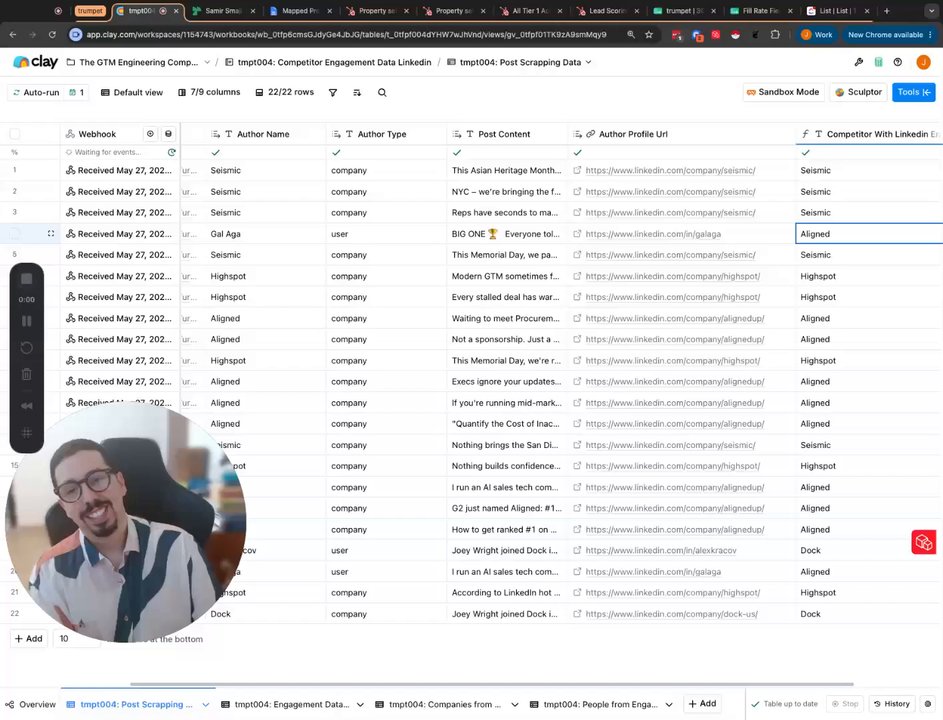
“We booked 11 demos, 11 meetings this week from all the signals.”
 2,062-company ABM audience
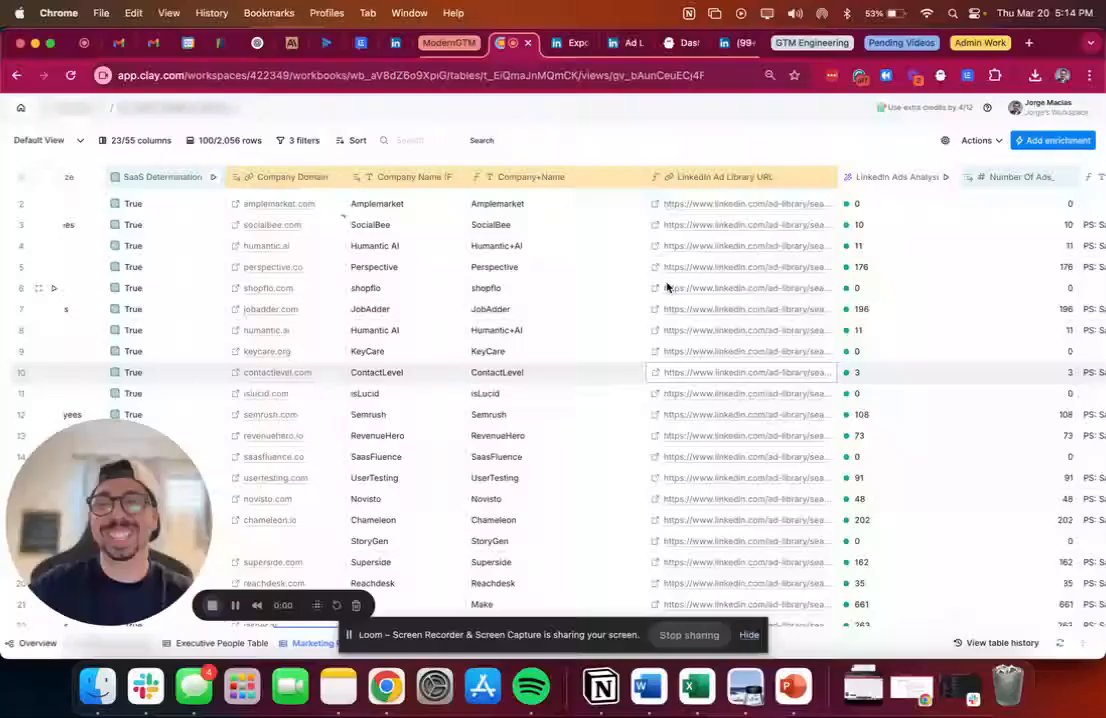
“This is perfect for the ABM thing. Like, seriously though.”
What has GTM Engineering built for clients?
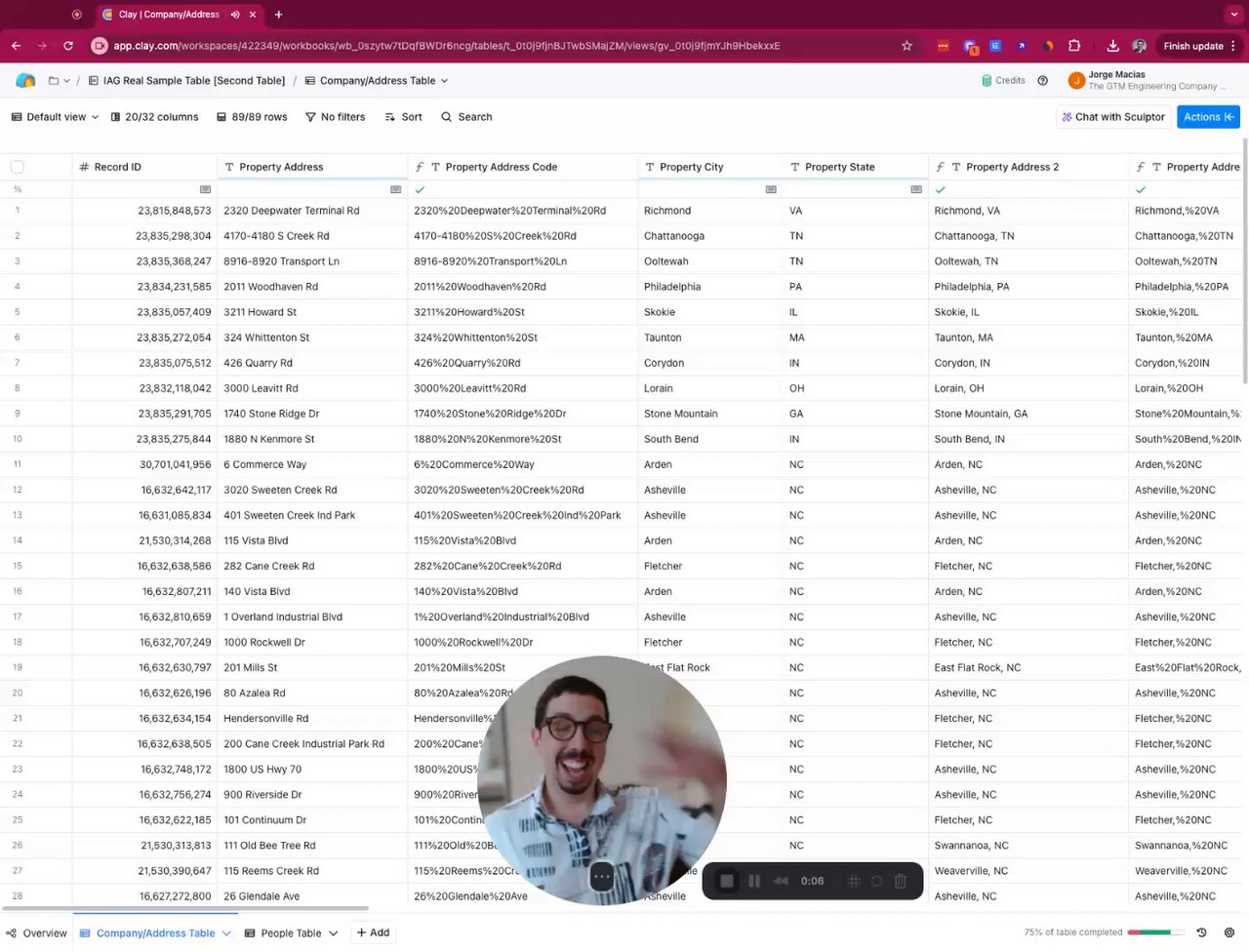
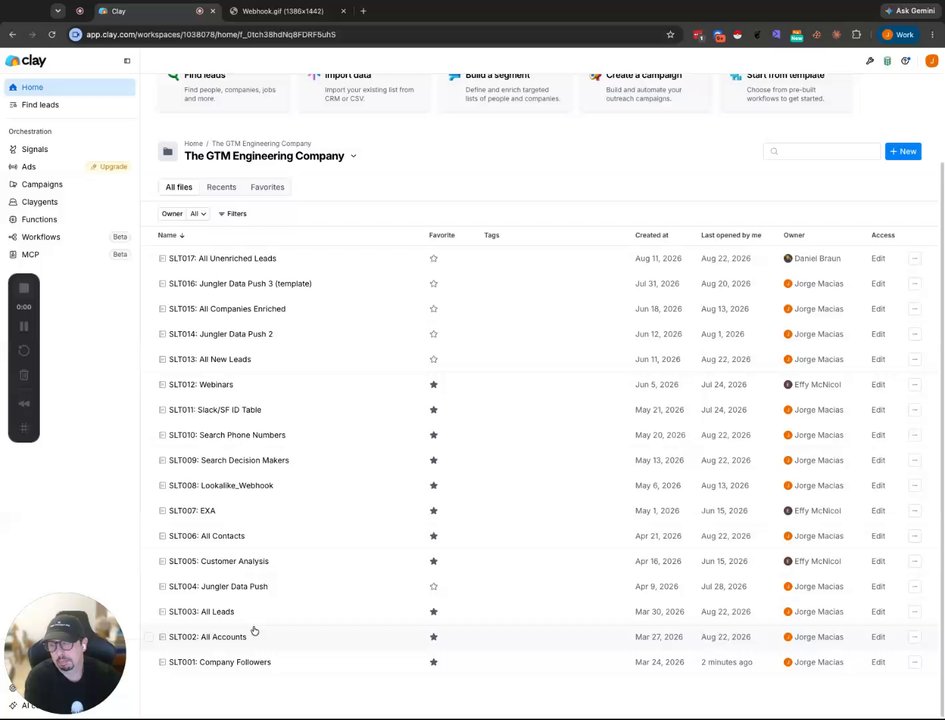
Every case study below shipped inside the client’s own CRM, HubSpot or Salesforce, and each write-up names the client, the systems that were built and the numbers they moved. Every one carries a recorded walkthrough. Filter by the seat you sit in.
10 of 10 case studies
Want one of these written about your CRM?
Thirty minutes. We look at what you are running today and you leave with a shortlist of what to build first.
What do clients say about the work?
Nine clients and thirteen colleagues, on what it is like to work with us over an engagement rather than inside one build.
“If you ever get to start your gtm engineering journey with Jorge, count your lucky blessings. His business acumen and sales experience create a great foundation for understanding what it is you are trying to do when it comes to generating pipeline. The first month we worked together we generated 4 opportunities and it’s been ROI positive working with Jorge since. The only reason I wouldn’t recommend Jorge is so that you don’t steal him from me and he doesn’t stop working with me.”
 Arthur Castillo
Client
Founder, ModernGTM
Arthur Castillo
Client
Founder, ModernGTM
“Jorge brought structure and scalability to our go-to-market engineering stack, combining technical precision with strategic insight to streamline how we operate.”
“Jorge successfully helped build a Clay table to source targeted contact information, despite initial skepticism from other consultants. He reverse-engineered a system of HTTP API calls within Clay, connecting industry-specific databases with alternative data providers, and provided training on the automations.”
“Jorge came on board as a sales coach and revamped our approach to sales and cold outreach. His advice was spot-on and easy to implement, and we’ve seen our sales shoot up since. On top of all that, Jorge’s just a great person to work with — positive, enthusiastic, and always ready to dive in.”
 Gabriel Pérez
Client
Founder, Caproni & Nexrizen
Gabriel Pérez
Client
Founder, Caproni & Nexrizen
“Working with the GTM Engineering team was refreshingly collaborative. They communicated clearly, challenged ideas thoughtfully, and were always willing to experiment. Their comfort moving things around inside our Clay tables and aligning execution with strategy made them feel like an extension of our team.”
“Jorge is a rockstar. He marvelously combines a strong sales accumen and excellent copywriting skills with the ability to quickly create complex and innovative data enrichment and outbound solutions. Jorge is much more than a builder - but a strategic thought partner that's an extension of your team. Expect Jorge to help your team deliver results quickly.”
 Joe Hinderstein
Client
Head of Business Development, Grapevine Health
Joe Hinderstein
Client
Head of Business Development, Grapevine Health
“We're working with Jorge B. Macias now and he's awesome!!! He's very knowledgeable and provides in depth examples and is also super patient. If you're thinking of hiring him, l'd highly recommend!!! Feel free to DM me if you have any questions”
 Amit Arora
Client
Revenue Operations Manager, WebAi
Amit Arora
Client
Revenue Operations Manager, WebAi
“Jorge went out of his way from our first connection to create a seamless evaluation and buying process. He took time to get to know our business and my own role/experience in far more depth than necessary to qualify or sell for the opportunity. In this, he demonstrated a deep curiosity for new companies, products, and growth strategies.
Jorge helped us craft a deal that aligned with our priorities while meeting his own business objectives. He closed out the process by ensuring our success and staying in touch throughout the full experience. I'd recommend buying from Jorge any chance you get and would be eager to have an opportunity to work together in more depth.”
 Jay Krause
Client
Chief of Staff, InvestNext
Jay Krause
Client
Chief of Staff, InvestNext
“I still remember that during one of our sales consulting sessions, you gave me one of the biggest unlocks I’ve had on this entrepreneurship journey.”
 Jaime Arias
Client
Founder & CEO, Dynamic Insurance Solutions
Jaime Arias
Client
Founder & CEO, Dynamic Insurance Solutions
“I had the amazing pleasure of working with Jorge while he was an AE for Offsite. I was amazed by Jorge's professionalism, integrity, kindness, and tenacity to get things done. Over the course of our time working together, the qualities I admired in Jorge from day one never changed. He continued to supersede expectations, always available to solve problems, even when that meant it was taking from his personal time. He believes in the mission he is supporting, aligns with core values, and gives it everything and more. Jorge is THAT employee you want on your team.”
 Katie Larabee
Colleague
Chief of Staff
Katie Larabee
Colleague
Chief of Staff
“Jorge has an innate ability to build genuine connections with clients and colleagues alike. His warm and approachable demeanor immediately puts others at ease, creating an atmosphere of trust and open communication. Jorge's exceptional communication skills enable him to effectively articulate the value of the products and services.
Furthermore, Jorge has embraced the power of AI productivity tools, leveraging them to enhance client calls and follow-up processes. His proactive approach in incorporating cutting-edge technology has significantly streamlined communications and likely his own productivity, resulting in improved efficiency and ultimately, a more delightful client experience.”
 Shanaz Chowdhery Witt
Colleague
Chief of Staff, Revenue at GitHub
Shanaz Chowdhery Witt
Colleague
Chief of Staff, Revenue at GitHub
“Hiring Jorge is the best decision I have made in my business career.
I have never met someone so engaged with his work from day one and offered valuable advice to improve processes, increase sales, and build a rocketship start-up. Unfortunately, due to the market, Jorge's position was eliminated - but the moment I can, I will reach out to Jorge to see if he would be willing to work with me again.
If you are looking for a Head of Sales, Director of Sales, or #1 Sales Hire - Hire Jorge.”
 Jake White
Colleague
Head of Sales, Offsite
Jake White
Colleague
Head of Sales, Offsite
“I was fortunate enough to have Jorge on my team at Reprise. Jorge is one of the most dedicated and coachable sales professionals I have had the pleasure of working with. While being a great salesperson is important, what impressed me the most about him was his willingness to try new things, rapidly adapt to changes, and empathize with his customers.”
 Adam Jay
Colleague
Founder & CEO, Revenue Reimagined
Adam Jay
Colleague
Founder & CEO, Revenue Reimagined
“I had the pleasure to work with Jorge in BrainHi during more than 3 years, where he went through the entire sales cycle, from Sales Development Rep to an Account Executive. Jorge was crucial to get the company to the current revenue, closing majority of our customers base.
He possesses a remarkable amount of knowledge in processes, thanks to his Engineering background, and also can understand a technical or non-technical system, end to end. Jorge's versatility is a skill that will have a huge impact in any organization, from having the right mindset to execute at a very fast pace.”
 Israel Figueroa Fontánez
Colleague
Co-Founder & CTO, BrainHi
Israel Figueroa Fontánez
Colleague
Co-Founder & CTO, BrainHi
“Jorge has unmatched networking skills, learns fast, and influences others effectively. He’s a servant leader and a results-driven individual. Any firm would be lucky to have him.”
 Javier Roman Gonzalez
Colleague
Data Engineering Manager, Xtillion
Javier Roman Gonzalez
Colleague
Data Engineering Manager, Xtillion
“Your authentic way of connecting with curiosity and always motivating others has always inspired me to take risks and believe in my ideas.
You're one of those people that I go to and for sure get a "DO IT!" and "You are more than capable" supporting word.”
 Yaneisha Pérez
Colleague
General Manager, Ironhack
Yaneisha Pérez
Colleague
General Manager, Ironhack
“I had the pleasure of working and learning from Jorge during my time as Chief of Staff for Offsite. Jorge was a hardworking, talented team member who always brought so much energy and enthusiasm to our remote work environment. Jorge frequently went out of his way to educate the team on tech tools crucial to our success. His proactive approach and drive for continuous learning elevated the entire team.”
 Michelle Banham
Colleague
Chief of Staff, elvex
Michelle Banham
Colleague
Chief of Staff, elvex
“You are never going to find a more loyal, dedicated sales professional as Jorge. His calm, confident tone works its magic every time. I have worked with Jorge at two different companies and learned so much from him. Each company profited from his quota-crushing sales style. You will be remiss if you do not hire him.”
 Jamie Neubeck
Colleague
Head of Growth, Sound GTM
Jamie Neubeck
Colleague
Head of Growth, Sound GTM
“Jorge was our 2nd sales hire. He was highly successful in every role - SDR, Account Executive, and managing Revenue Operations. Batu is a great AE but is an even better team-player. Always happy to assist and mentor other team members. As an industrial engineer he is also process-oriented and brought many valuable suggestions to make our company more efficient. In summary, he brought a lot of charisma and value to every interaction with internal and external stakeholders!”
 Emmanuel Oquendo
Colleague
Co-Founder & CEO, BrainHi
Emmanuel Oquendo
Colleague
Co-Founder & CEO, BrainHi
“I had the privilege of working with Jorge at Offsite and would highly recommend him. As Account Executive in sales, he excelled in closing significant deals that contributed to the growth of the company. He is an excellent team player and extremely knowledgeable with Hubspot.
Outside of his responsibilities, he helped our marketplace team develop revenue pipelines and automations that are used daily for tracking key metrics. His positivity and optimism are infectious to any team! Jorge makes an incredible asset for a sales team and I'm grateful to have worked with him.”
 Kristin Hoogheem
Colleague
Head of Marketplace, Offsite
Kristin Hoogheem
Colleague
Head of Marketplace, Offsite
“Jorge and I met way back when, but I have had the pleasure of working with him in multiple companies. He introduced me to the world of SaaS sales, took me under his wing as an SDR and thanks to his mentorship, was able to grow into becoming an AE in a short time.
Jorge is an incredible asset to have on any sales team due to his skillset, knowledge in sales but also for his leader attributes. I consider myself lucky to have had the privilege to work alongside him.”
 Lyanne Ponce
Colleague
Founder, Close Won Strategies
Lyanne Ponce
Colleague
Founder, Close Won Strategies
“Not only was he one of the most incredible sales people I've ever seen, he is an even better team member. He goes out of his way to build others up and really helps create a positive and ambitious culture. He uses the same positive energy when selling and working with clients and everyone ends up feeling like they made a best friend with Jorge! While I was at an Offsite with Jorge, he told me how he genuinely loves selling, which makes sense why he is so good at it! Even despite a difficult economy right now, Jorge is able to help find solutions for clients to save money but still sell a new deal! Any team that that gets Jorge should consider themselves really really lucky!”
 Kimberly Ford
Colleague
Head of Customer Success, Offsite
Kimberly Ford
Colleague
Head of Customer Success, Offsite
Questions: what does the proof show?
What results has GTM Engineering produced for clients?
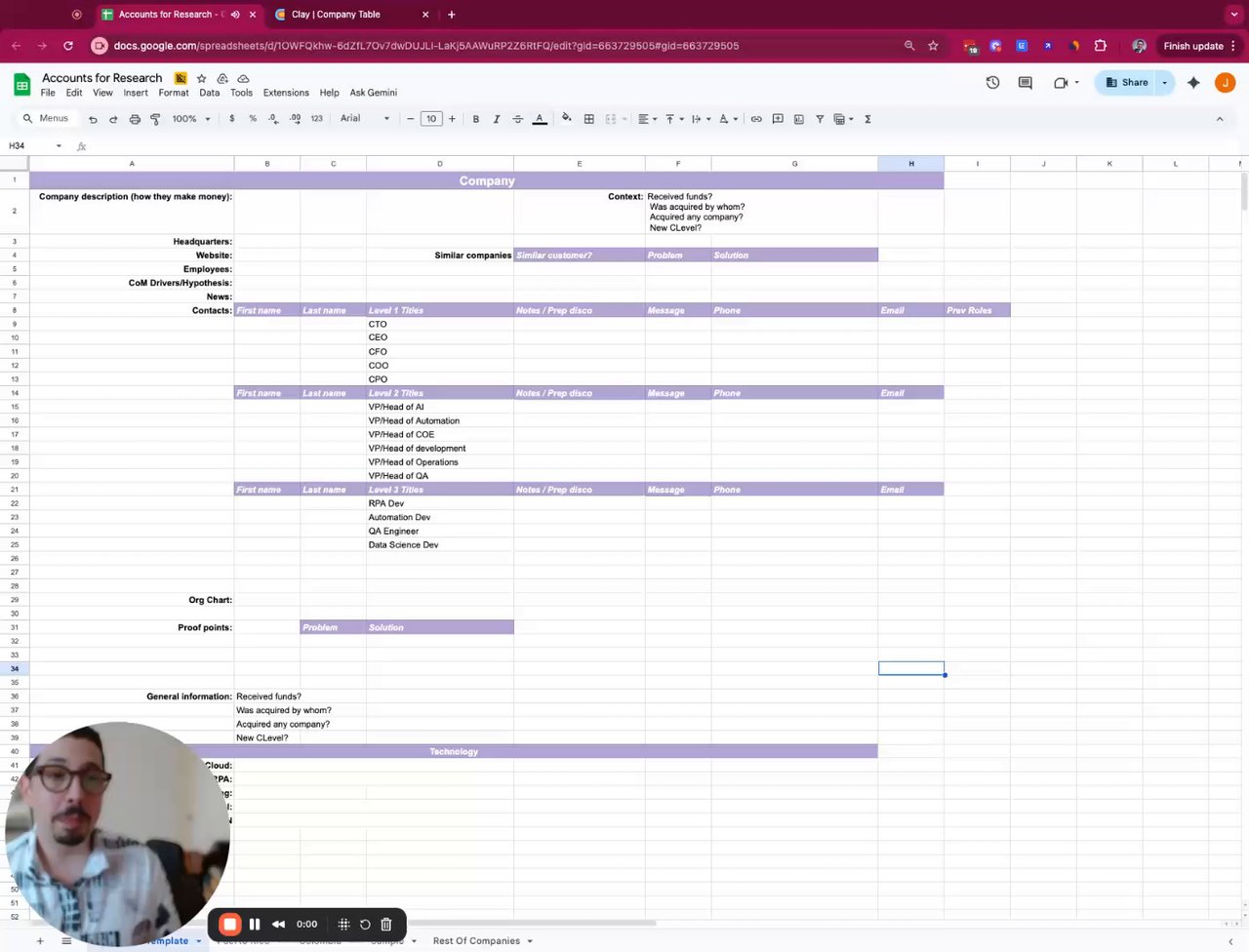
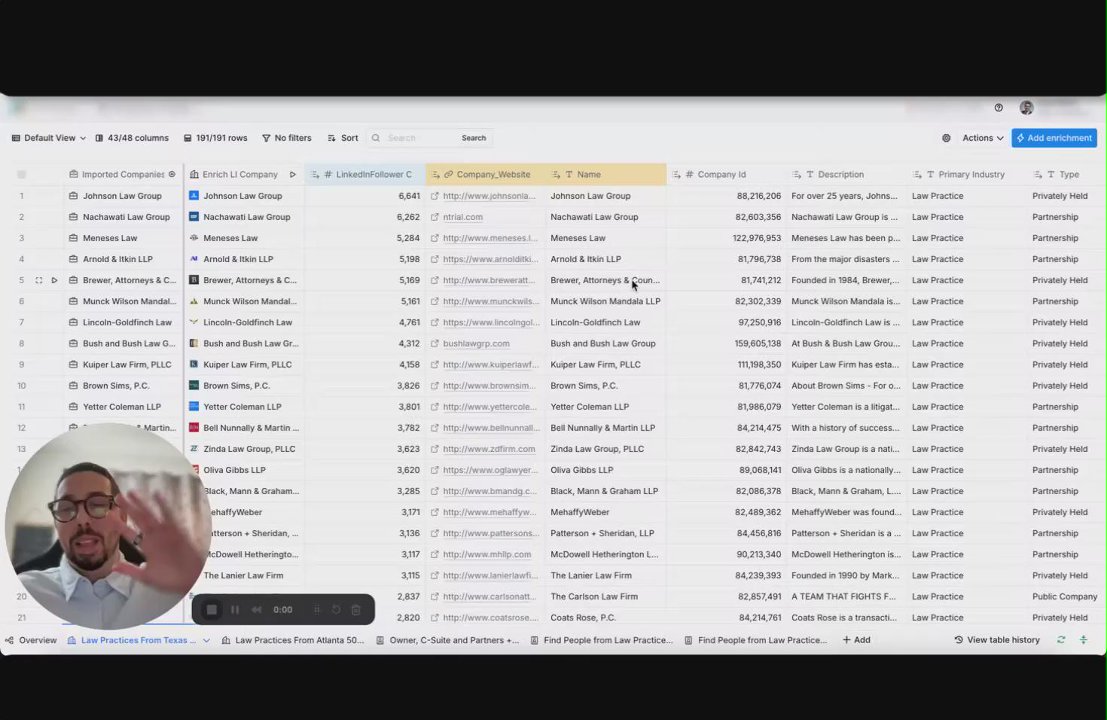
GTM Engineering publishes the numbers per named engagement. For Slate, account field fill moved from under 10% to 75-85% and 48,703 of 65,107 open leads were enriched, with 310 redundant account records identified out of 6,324 scanned. For QC Growth and NodeSource, 4,000 prospects produced 300 responses (7.5%) and 50 booked meetings in under three months. For an enterprise RPA company, account research fell from 2.5 hours to under 15 minutes, about 250 hours saved per rep per quarter.
What does a GTM engineering engagement actually look like?
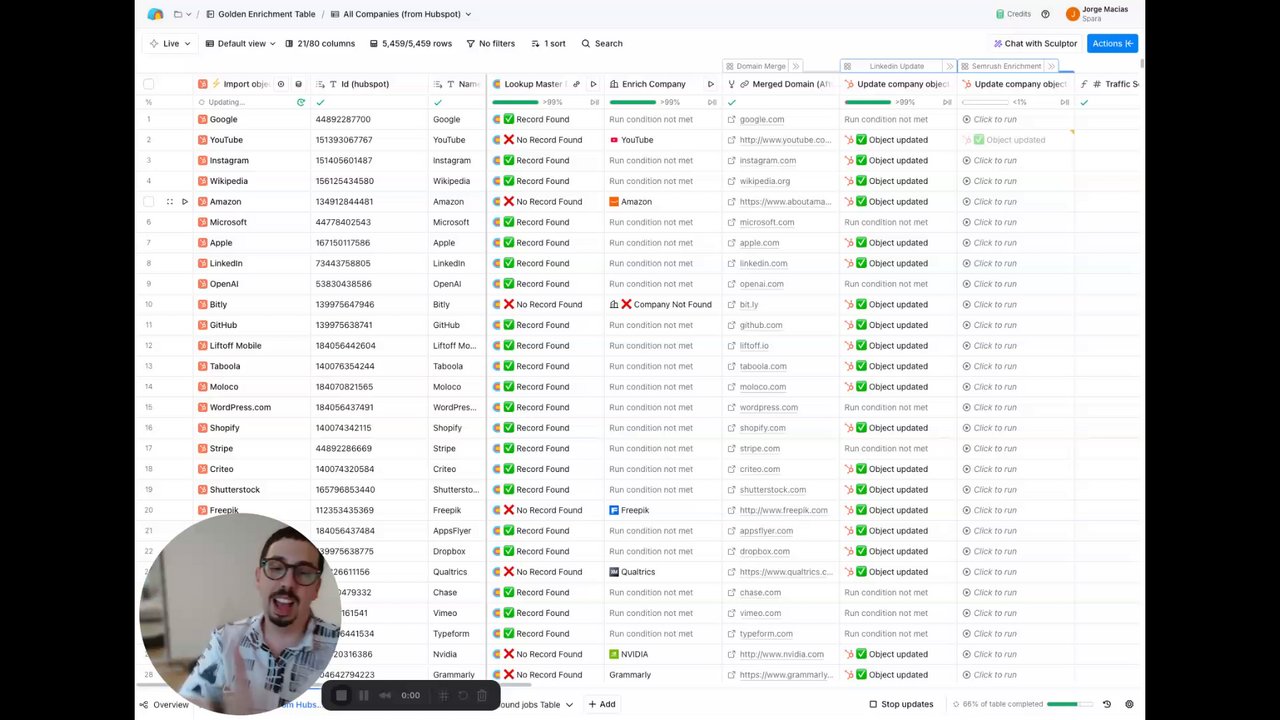
A GTM Engineering engagement starts at the data layer and ends with the client running it. The Slate build ran in four phases: enrichment architecture, a scoring model shipped as native Salesforce formula fields, hygiene as running infrastructure, then operability and transfer with process documentation, Loom walkthroughs and runbook material. By the end of it the client's own RevOps lead had built the leads-side job-change workflow himself, and traced a scoring bug into the formula before we did.
Do you have case studies in our industry?
The GTM Engineering case studies cover B2B software, developer tooling, enterprise automation, legal-services software, commercial real estate, social-media content platforms and marketing consulting: Spara, NodeSource with QC Growth, Nexrizen, IAG Real Estate, Modern GTM, Slate, trumpet and Fluint, plus one enterprise RPA company with over 5,000 employees that is published anonymously. The grid filters by seat, so a founder, an operations lead, a sales leader or a marketer can read only the engagements written for their role.
Can we see the work, or just read about it?
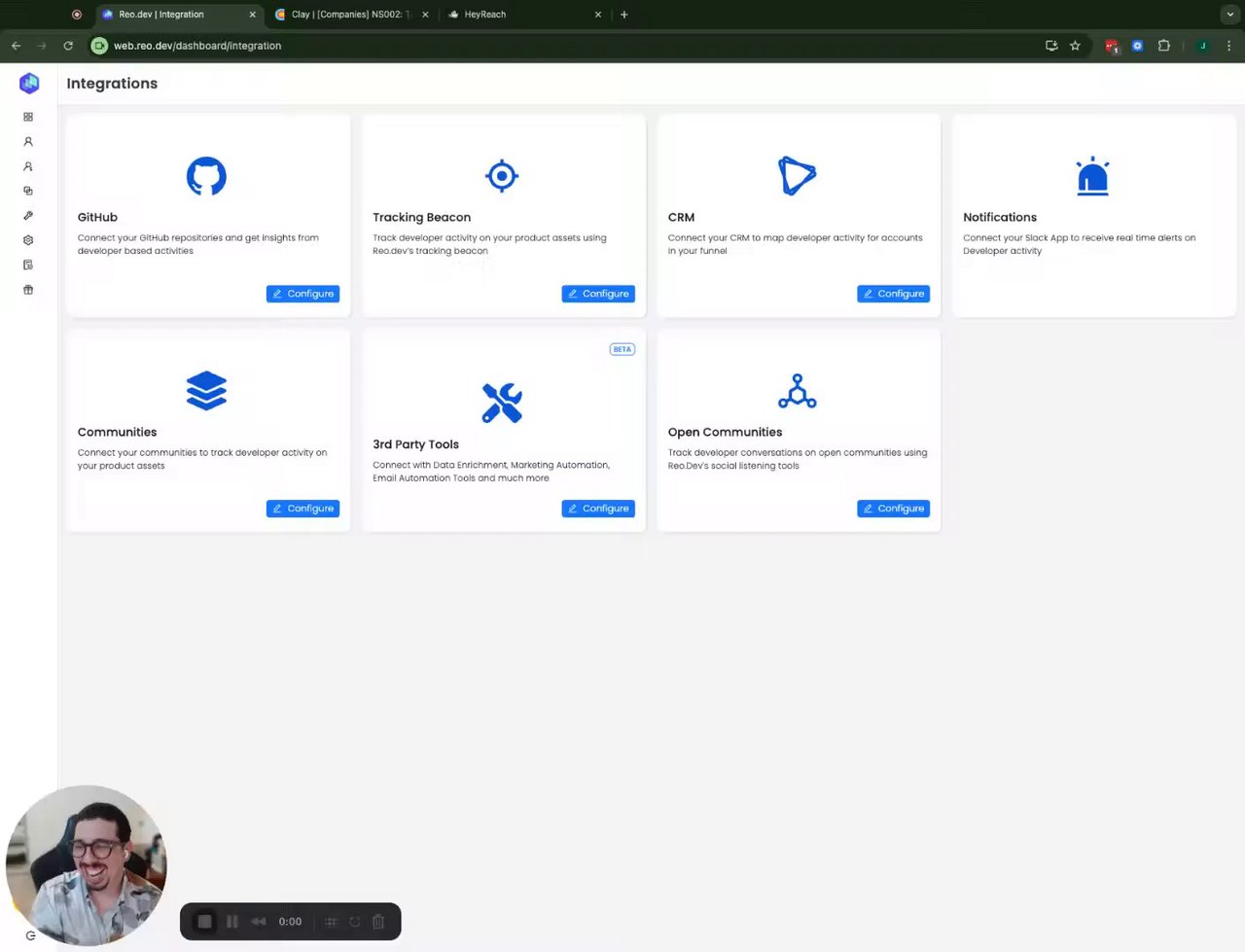
Six of the GTM Engineering engagements ship with a recorded walkthrough of the system being built, and the case studies page carries named client references beside them. Saad Khan, Director of GTM Engineering at trumpet: "We booked 11 demos, 11 meetings this week from all the signals." Kristin DeMar, Marketing & Growth Lead at Fluint, on the ABM audience: "This is perfect for the ABM thing." Arthur Castillo, Luke Bivens, Shae Lawson, Gabriel Pérez, Joe Hinderstein and Amit Arora are named in full on the same page.
How long did these engagements run?
The published GTM Engineering builds run in weeks, not years. The trumpet system reached a 100-point score on every contact and eight live signal plays in 13 weeks. Fluint's 2,062-company ABM audience and its supporting data layer took 12 weeks. QC Growth and NodeSource ran their campaigns in under three months, and Nexrizen went from one client to ten within 90 days.